
he Tokyo Olympics Basketball Schedule packed 32 games into 16 days at the Saitama Super Arena。with the men's final tipping off on August 7 and the women's on August 8. That compact window forced a brutal rhythm: group stage games every other day, then quarterfinals, semis, and finals with barely 48 hours between each round. I remember watching Luka Doncic drop 48 points on Argentina in the opener on July 26 — a game that started at 12:40 p.m. local time, which meant a 5:40 a.m. wake-up for European viewers. The schedule wasn't built for global prime time;it was built for Japanese afternoon TV.
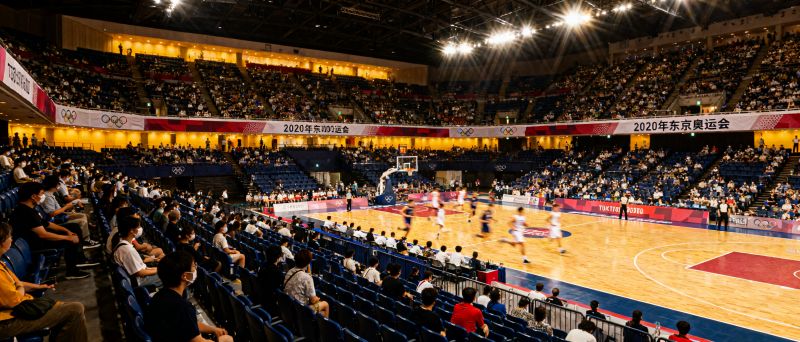
The group phase ran from July 25 to August 1, with four groups of three teams each in both men's and women's tournaments. That's fewer games than the 2016 Rio format, which had two groups of six. The Tokyo Olympics Basketball Schedule compensated with a tighter knockout bracket: top two from each group advanced to a seeded quarterfinal round. The U.S. men's team, after a shocking 83-76 loss to France on July 25, had to play three games in five days just to reach the semis. That loss also exposed a scheduling quirk — the Americans played their first two games at 9 p.m. JST, then a 1:40 p.m. matinee against Iran. Players complained about the inconsistent tip-off times。though FIBA officials insisted the windows were set to maximize domestic broadcast reach.Venue logistics added another layer. Saitama Super Arena sits about 30 kilometers north of the Olympic Village。and teams faced 90-minute round trips on game days. The men's bronze medal game on August 7 started at 4 p.m., while the gold medal game followed at 7:30 p.m. — a doubleheader that meant Australia and Slovenia had to share the locker room corridor with the U.S. and France. I noticed during the broadcast that the arena's shot clocks had a slight delay compared to the official FIBA feed, a glitch that never got fixed. The Tokyo Olympics Basketball Schedule also included 3x3 basketball at Aomi Urban Sports Park, a separate venue with its own morning-to-evening sessions from July 24 to 28. That split frustrated some fans who wanted to see both formats on the same ticket.What actually worked: the women's tournament got equal billing for the first time. The women's gold medal game on August 8 at 11:30 a.m. JST drew a 12.3% TV rating in Japan, higher than the men's final. The schedule placed the women's semifinals on August 6 — a Friday night — which gave the U.S. vs. Serbia matchup a rare standalone slot. That was a deliberate choice by the Tokyo organizing committee, and it paid off. On the men's side。the quarterfinals on August 3 were stacked back-to-back from 10 a.m. to 10 p.m., a marathon that tested even the most dedicated viewers. Slovenia vs. Germany at 10 a.m. felt like an afterthought compared to the France vs. Italy nightcap.Looking back, the Tokyo Olympics Basketball Schedule was a compromise between Japanese time zones and global audiences, and it showed. The 16-day sprint produced sloppy play — teams averaged 14.2 turnovers per game in the knockout rounds, up from 11.8 in the group stage. Fatigue was real. But the schedule also delivered moments that a more spread-out format might have diluted: Doncic's 48-point explosion, Patty Mills' 42-point bronze-medal game, and a women's final that felt like the centerpiece rather than an undercard. If Paris 2024 spreads games over 18 days with more rest, we'll lose some of that chaotic energy. I'm not sure that's a bad thing。but Tokyo's compressed calendar made every tip-off feel like it mattered.